
Medicare Annual Enrollment: 5 Decisions to Make Before December 7

When the coverage you count on is about to change, choosing a plan takes more than opening an envelope. You need clear information about costs, care, and what matters most to your family.
Medicare’s Annual Enrollment Period runs October 15 through December 7, 2026. It’s the yearly opportunity for people who already have Medicare to make certain coverage changes for 2027. The choices can feel like a lot (especially when you’re helping a parent while managing your own responsibilities) but reviewing your options is a normal part of staying prepared.
Most changes made during this period take effect January 1, 2027. Here are five decisions to work through before the deadline.
1. What does your coverage really cost?
A low monthly premium can look reassuring. But it is only one piece of the cost.
Gather your parent’s, or your own, current plan information and look at the full picture:
- Monthly premiums, including any separate Part D premium
- Deductibles before coverage begins
- Copays or coinsurance for doctor visits, hospital care, and other services
- Prescription costs at the pharmacy
- The plan’s annual out-of-pocket limit, if it’s a Medicare Advantage plan
Your plan’s Annual Notice of Change (ANOC) is a useful starting point. Plans send it each fall to describe changes in costs and coverage for the coming year. Read it alongside your recent medical and pharmacy expenses, not instead of them. If you don’t receive the notice, contact your plan.
If you’re helping a family member, make a simple list of the care they use regularly. A specialist visit, a recurring test, or a medicine taken every day can matter more to the household budget than the headline premium.
Medicare also doesn’t cover most long-term custodial care, such as ongoing help with bathing or dressing. That makes Medicare review one useful part of long term care planning, but it isn’t a substitute for a broader conversation about future support and costs.

2. Are your doctors, hospital, and pharmacy still covered?
A familiar doctor can be central to someone’s care. Before changing plans, or deciding to stay, check whether their doctors, specialists, hospitals, and preferred pharmacy will be covered next year.
This step matters especially with Medicare Advantage, where networks and service areas vary by plan. Plans may also have referral rules or require prior authorization for certain services. Check each provider directly, using the plan’s current directory and, when possible, a call to the provider’s office. A name appearing in an old directory doesn’t guarantee the provider will be in network next year.
With Original Medicare, you can generally see any doctor or hospital in the United States that accepts Medicare. If you pair it with a Medigap policy, the provider access rules still come from Original Medicare.
Think about practical access, too: Is the pharmacy convenient? Is the preferred hospital close enough? Does your parent see a specialist outside the local area? These details can shape how manageable care feels day to day.
3. Will the plan still cover the medications you take?
Prescription coverage can change from year to year. A drug that was covered, or affordable, this year may have a different cost or coverage rule next year.
Make a current medication list, including dosage and how often each medicine is taken. Then use the official Medicare Plan Compare tool to check each plan’s formulary, the list of covered drugs. Look at:
- Whether each medication is covered
- Its tier and estimated cost
- Whether prior authorization or quantity limits apply
- Which pharmacies are preferred or in network
A plan’s drug coverage is personal. The best fit depends on the medicines your family member actually takes, not a general rating or a neighbor’s experience. If a drug’s coverage is unclear, contact the plan and ask how it will be covered in 2027.
4. Which kind of coverage fits your health needs and budget?
This is not a contest with one right answer for everyone. It’s a choice between different ways to receive and pay for Medicare-covered care.
Original Medicare includes Part A and Part B. Many people add a separate Part D plan for prescription drugs and may choose a Medigap policy to help cover certain out-of-pocket costs. Original Medicare generally offers broad provider choice among doctors and hospitals that accept Medicare, without the networks typical of Medicare Advantage plans.
Medicare Advantage is another way to receive Part A and Part B benefits through a private plan. Many plans include prescription drug coverage and may offer extra benefits, such as dental, vision, hearing, or fitness benefits. Those benefits, along with costs and rules, vary by plan. Medicare Advantage plans have provider networks and may require prior authorization for some services.
When comparing plans, consider how you prefer to receive care, which providers you want to keep, how predictable you need your costs to be, and what you can afford. A plan with extra benefits isn’t automatically the best fit; a plan with a lower premium isn’t automatically the least expensive overall.
There is an important timing consideration if you’re thinking about Original Medicare with a Medigap policy. Your one-time federal Medigap Open Enrollment Period generally lasts six months, starting when you’re 65 or older and enrolled in Part B. Outside that window, an insurer may use medical underwriting when you apply, unless you have a guaranteed-issue right or other protection. That can make switching Medigap policies harder. Before changing coverage, confirm your options and any applicable state protections.
For a plain-language overview, see Medicare’s comparison of Original Medicare and Medicare Advantage.
At Houston Legacy Institute, Medicare education draws on more than 20 years of professional experience in Medicare Advantage and senior primary care, as well as lived experience caring for both parents. The goal is to help families understand their choices and prepare with care, not to tell every family to choose the same plan.

5. What is your deadline, and where can you get help?
For most people already enrolled in Medicare, the Annual Enrollment Period ends December 7, 2026. The plan must receive your enrollment request by that date. Changes generally begin January 1, 2027.
If you miss the deadline, you generally remain in your current plan for the next year unless a different enrollment opportunity applies. Some people qualify for a Special Enrollment Period because of a specific life event. People already enrolled in Medicare Advantage may also have a separate opportunity to make certain changes from January 1 through March 31. These options don’t apply to everyone, so confirm your situation before relying on them.
Annual Enrollment is different from the Initial Enrollment Period. If you’re turning 65 or newly eligible for Medicare, your Initial Enrollment Period is based on your own eligibility dates. It isn’t the same as the October 15–December 7 period. Visit Medicare’s guide to signing up to learn which dates apply to you.
You don’t have to sort through everything alone. For free, unbiased counseling, contact your local State Health Insurance Assistance Program (SHIP). You can also call 1-800-MEDICARE (1-800-633-4227) or use Medicare Plan Compare. These official resources can help you review available plans and ask informed questions.
Make room for the details your family may need
Medicare decisions are one part of caring for your health and planning ahead. Keeping insurance details, medications, doctors, and important medical information in one organized place can also help the person who may need to step in for you.
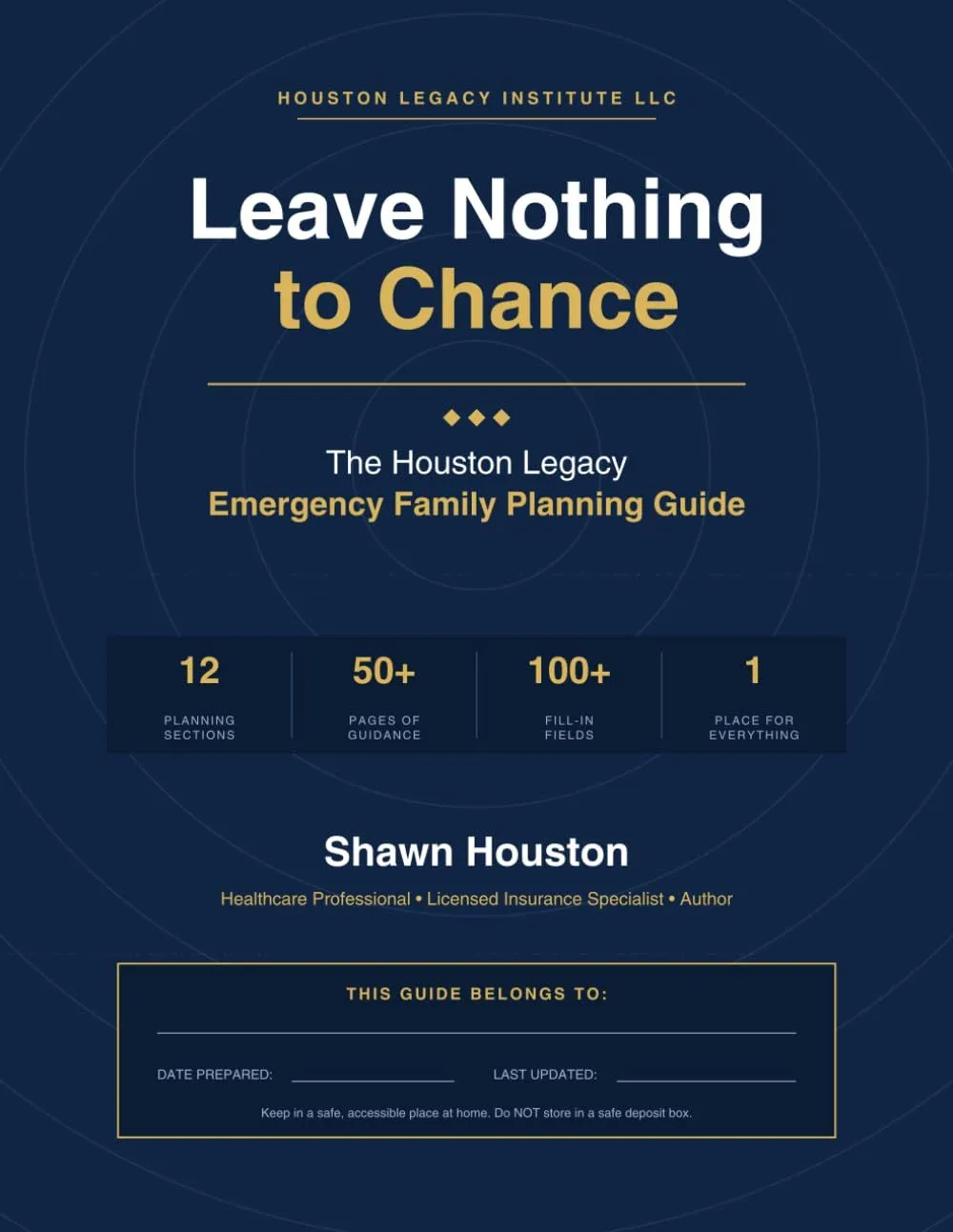
Leave Nothing to Chance: The Houston Legacy Emergency Family Planning Guide helps families gather those details before they’re needed. A little organization now can make it easier for your family to find the information that matters later.
Houston Legacy Institute does not sell insurance plans. This article is educational information, not individualized advice. Plan details change each year, so confirm costs, coverage, and enrollment rules with Medicare.gov or a licensed professional before making a decision.
Start with one review. Stay ready together.