

When love becomes caregiving, you need more than love. You need information your family can find, decisions they can understand, and a plan that does not depend on one person remembering everything under pressure.
In our recent post, "What Is a Baby Senior? How to Intentionally Plan for Your Golden Years," we talked about preparing before a crisis. This legacy planning checklist is the practical next step.
Most families have not completed every item on a list like this. That is normal. Life is full, and these conversations can feel difficult to begin. The goal is not perfection. The goal is to make the next decision easier for the people you love.
Start with one organized place
A good plan is helpful. A plan your family can actually find is even better.
Keep your essential information together in one secure, accessible place. That may be a physical binder, a protected digital folder, or both. Make sure trusted family members know where it is and how to access it.
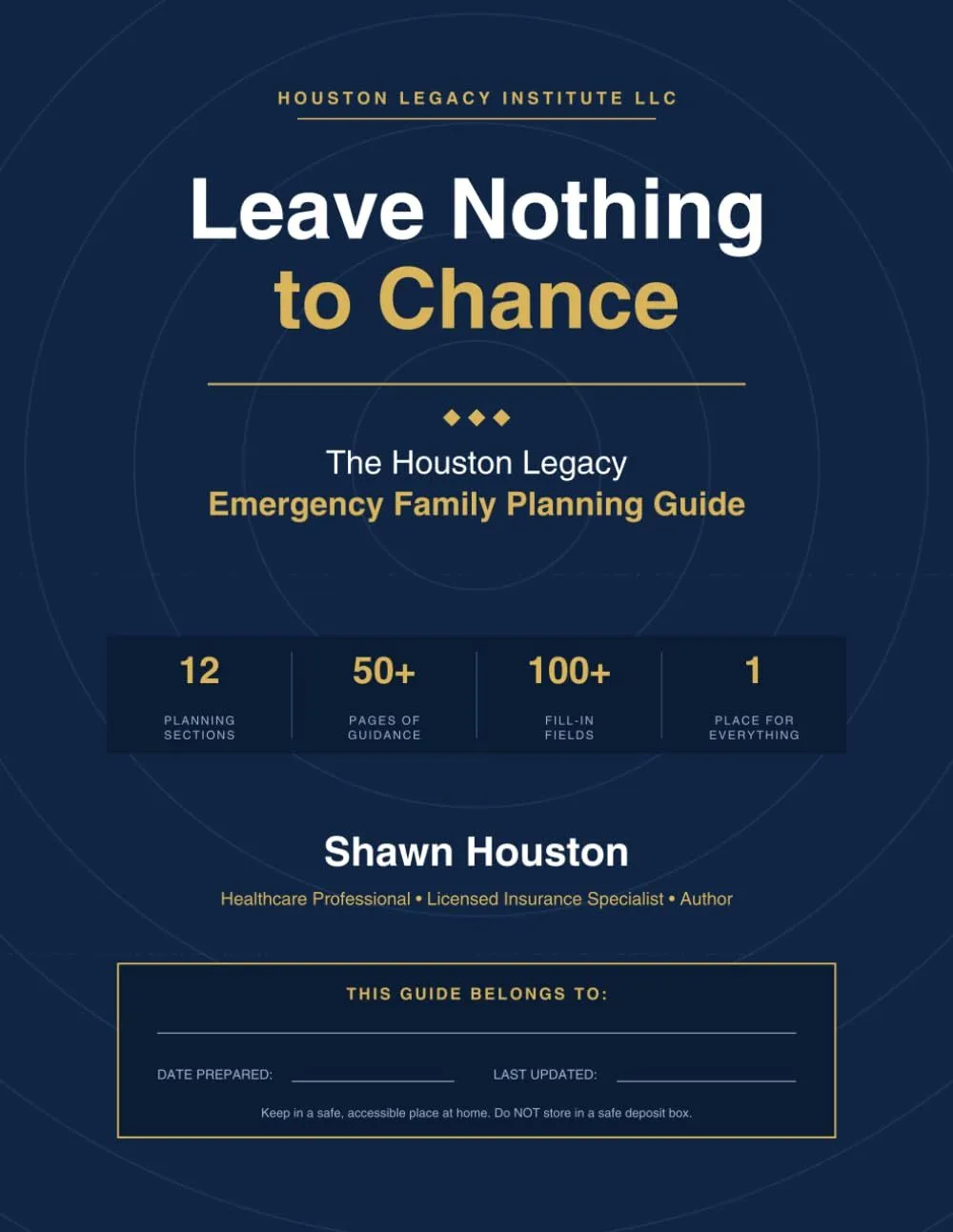
Leave Nothing to Chance: The Houston Legacy Emergency Family Planning Guide was created for this purpose. It gives medications, doctors, insurance details, legal documents, and final wishes one organized home.
Do not store every original document in a place no one can reach quickly. Instead, keep a simple record of where originals are located, such as with your attorney, in a home safe, or in another secure location.
Your legacy planning checklist
Use the list below as a starting point. Check off what is complete, mark what needs attention, and choose one small step to begin this week.
1. Gather your essential legal documents
These documents help clarify who can act for you, how your property should be handled, and what your healthcare wishes are.
- Last will and testament — Identify how you want your property distributed and who should serve as executor. If you have minor children or dependents, discuss guardianship with an attorney.
- Durable financial power of attorney — Name someone you trust to manage financial matters if you cannot manage them yourself. This may include banking, bills, property, insurance, and benefits.
- Healthcare proxy or healthcare power of attorney — Name the person you want to make medical decisions if you cannot speak for yourself. Confirm that the person is willing to serve and understands your wishes.
- Advance directive or living will — Record your preferences for serious illness and life-sustaining treatment. Requirements and names for these documents vary by state, so consider working with a qualified attorney or healthcare professional.
- HIPAA authorization, if appropriate — Give selected family members or caregivers permission to discuss your medical information with healthcare providers when needed.
- Trust documents, if applicable — If you have a trust, include a copy and instructions for contacting the attorney or professional who helps manage it.
- A list of where the originals are kept — Your family should know where to find the signed versions of these documents.
Legal documents are important, but they are only one part of estate and legacy planning. Your chosen decision-makers also need to know that they have been named. A quiet conversation now can prevent confusion later.
2. Organize medical and medication information
A sudden hospital visit can turn a simple question — "What medications does she take?" — into a stressful search through cabinets, text messages, and old paperwork. Make the answer easy to find.
- Current medication list, including dosage and schedule
- Medication allergies and other allergies
- Major diagnoses and health conditions
- Primary care provider and specialist contact information
- Preferred pharmacy and hospital
- Recent surgeries, hospitalizations, or significant medical history
- Medical devices, equipment, or supplies currently used
- Names and contact information for trusted caregivers
- Copies of relevant medical records, if available
Review this information whenever medications change or after a major appointment. Even a handwritten list is better than relying on memory.
3. Record your insurance and Medicare details
Insurance information can be difficult to understand during an emergency, especially when several cards, plans, and phone numbers are involved. Include copies or details for:
- Medicare card and number
- Medicare Advantage plan information, if applicable
- Medicare Supplement or Medigap policy information, if applicable
- Prescription drug plan information
- Medicaid information, if applicable
- Long-term care insurance policy and claims contact
- Employer or retiree insurance information
- Life insurance policies
- Disability insurance
- Social Security, pension, or annuity information
- Insurance company phone numbers and online account details
Medicare generally does not pay for most ongoing long-term care, including many custodial services. You can review Medicare's information about long-term care as part of your long term care planning. You can also compare Original Medicare and Medicare Advantage through Medicare.gov.
If you have Medicare or are approaching eligibility, keep your coverage information current and review your options during the appropriate enrollment periods.
4. List financial accounts and beneficiaries
Your family may know which bank you use. They may not know every account, policy, or automatic payment connected to it. Create a current inventory of:
- Checking and savings accounts
- Investment and brokerage accounts
- Retirement accounts, including 401(k)s and IRAs
- Pensions and annuities
- Life insurance policies
- Real estate, deeds, and mortgage information
- Vehicles and titles
- Business interests
- Credit cards and recurring bills
- Loans, debts, and other financial obligations
- Digital accounts and important subscriptions
For each account, record the institution, account type, contact information, and where the account details are stored. Do not write sensitive passwords in an unsecured document. Instead, explain how your trusted person can access your password manager or other secure system.
Review your beneficiary designations as well. Retirement accounts, life insurance, and payable-on-death accounts may pass directly to named beneficiaries. Those designations should fit with your overall plan and be reviewed after major life changes such as marriage, divorce, birth, or death.
5. Describe caregiving preferences and daily routines
Caregiving is not only about medical treatment. It is also about the ordinary details that make someone feel safe and known. Write down what a caregiver would need to understand your daily life:
- Preferred daily schedule
- Meal preferences and dietary restrictions
- Bathing, dressing, and mobility needs
- Sleep habits and routines
- Transportation needs
- Religious, cultural, or community practices
- Pets and household responsibilities
- Important relationships and regular contacts
- What helps you feel calm when you are upset or confused
- Preferred care setting, such as home, assisted living, or another community
- People who may be able to provide respite or practical support
This is where long term care planning becomes personal. You may prefer to remain at home, live near family, or receive care in a community setting. You may want certain people involved in your care and others kept informed from a distance.
Your preferences may change. That is okay. A plan can be updated as your health, finances, and family circumstances change.
Preserve the part of your legacy that cannot fit in a form
Estate planning helps organize property and finances. Legacy planning also asks what you want your family to remember, carry forward, and understand. Consider adding:
- Final wishes for burial, cremation, or memorial services
- Organ or tissue donation preferences
- People to notify
- Charitable giving wishes
- Important family traditions
- Letters to children, grandchildren, or other loved ones
- Favorite recipes, photographs, or family documents
- Stories about your childhood, work, faith, and major life lessons
- Audio or video recordings of memories
- Instructions for preserving digital photographs and accounts
The chapter nobody writes often includes the stories families wish they had asked about sooner. You do not need a perfect memoir. Start with one memory, one recipe, or one story your family has heard many times but never written down.
Talk about the checklist before you need it
A completed checklist is valuable. A shared understanding is even better. Choose a calm time to tell your family:
"I am organizing my information so you will not have to guess if something changes. I want you to know what matters to me and where to find the details."
You do not have to finish the entire conversation in one sitting. Begin with the person you have chosen as your healthcare proxy or financial agent. Ask whether they are willing to help. Tell them where your documents are kept. Then continue the conversation over time.
Shawn Caprice Houston understands both sides of this work. She cared for both of her parents while building more than 20 years of professional experience in Medicare Advantage and senior primary care. Her book, When Love Becomes Caregiving, brings those personal and professional perspectives together with guidance on Medicare, long-term care, legal documents, dementia caregiving, and caring for the caregiver.
Preparation does not remove every hard moment. It gives your family a steadier place to stand when life changes.
Take one step this week
You do not have to complete your legacy planning checklist in one weekend. This week, you might:
- Make a current medication list
- Locate your will and powers of attorney
- Write down your Medicare or insurance information
- Ask someone to serve as your healthcare proxy
- Record one caregiving preference
- Choose a secure place for your documents
- Tell one family member where to find your plan
- Print or save this checklist for your next family conversation
You can also begin with Houston Legacy Institute's Legacy Readiness Assessment to identify which areas may need attention. Preparation is not a prediction. It is a way of showing up for your family before the phone rings.